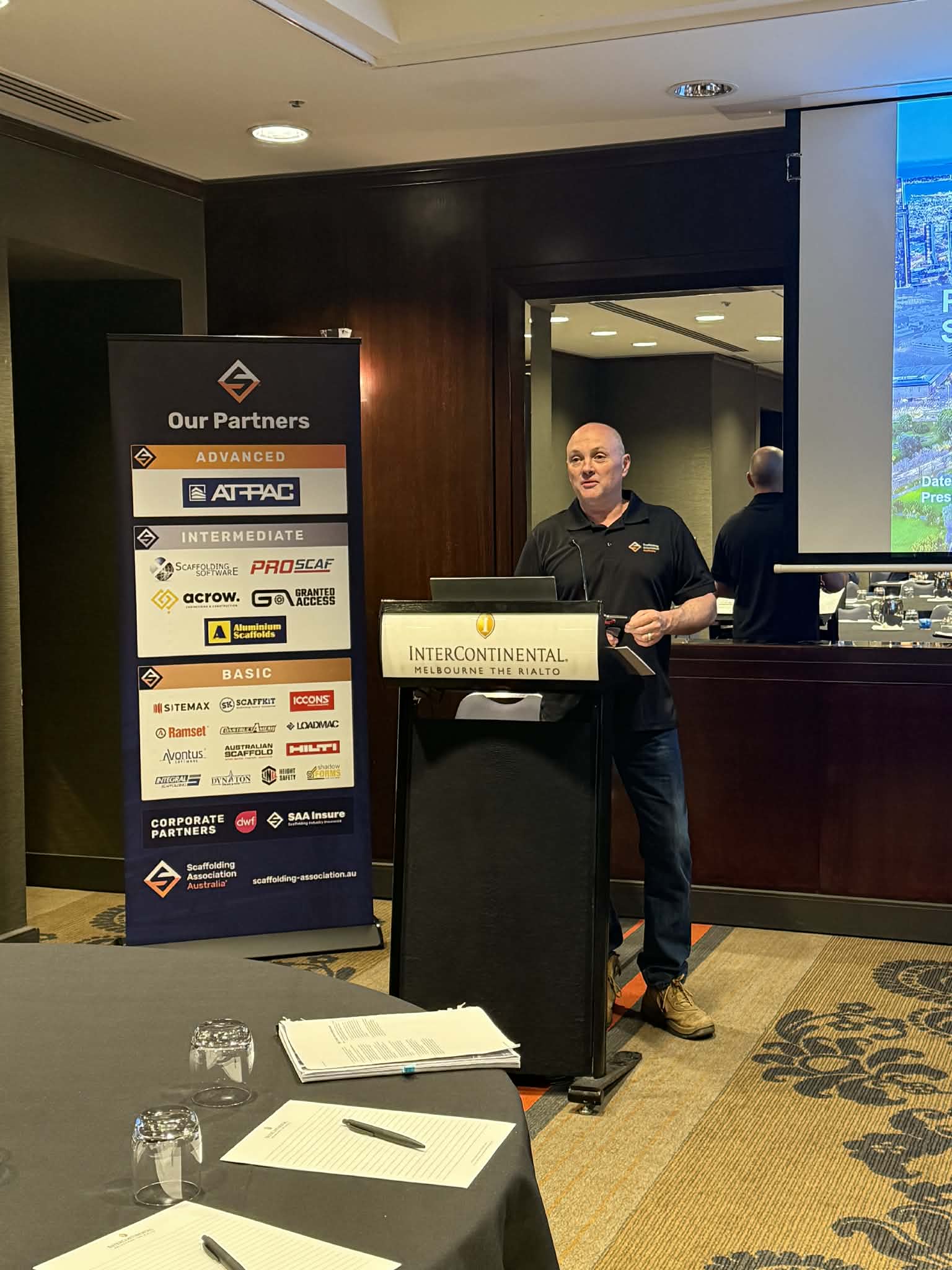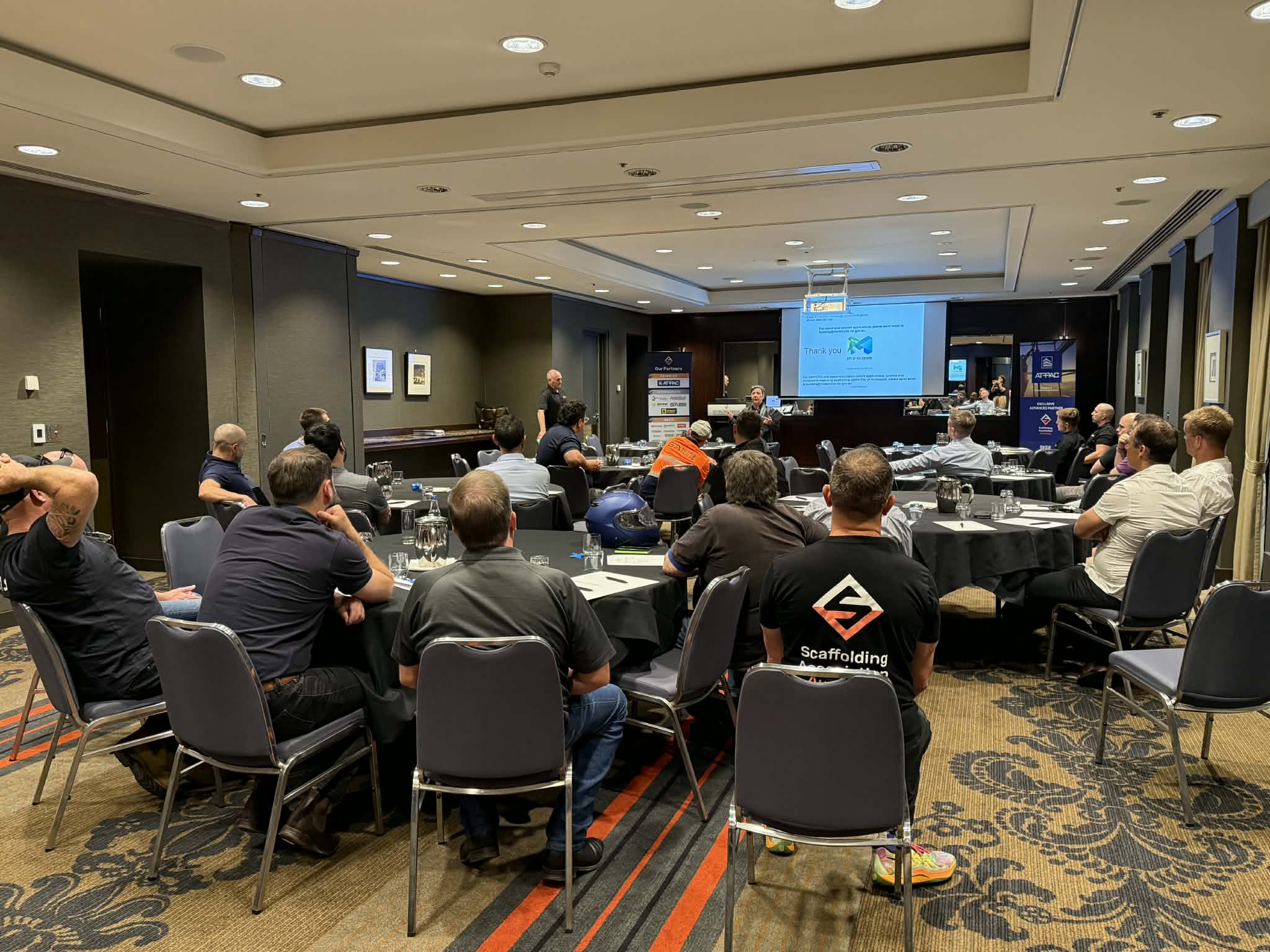

Victoria Members Meeting, 5th December 2025
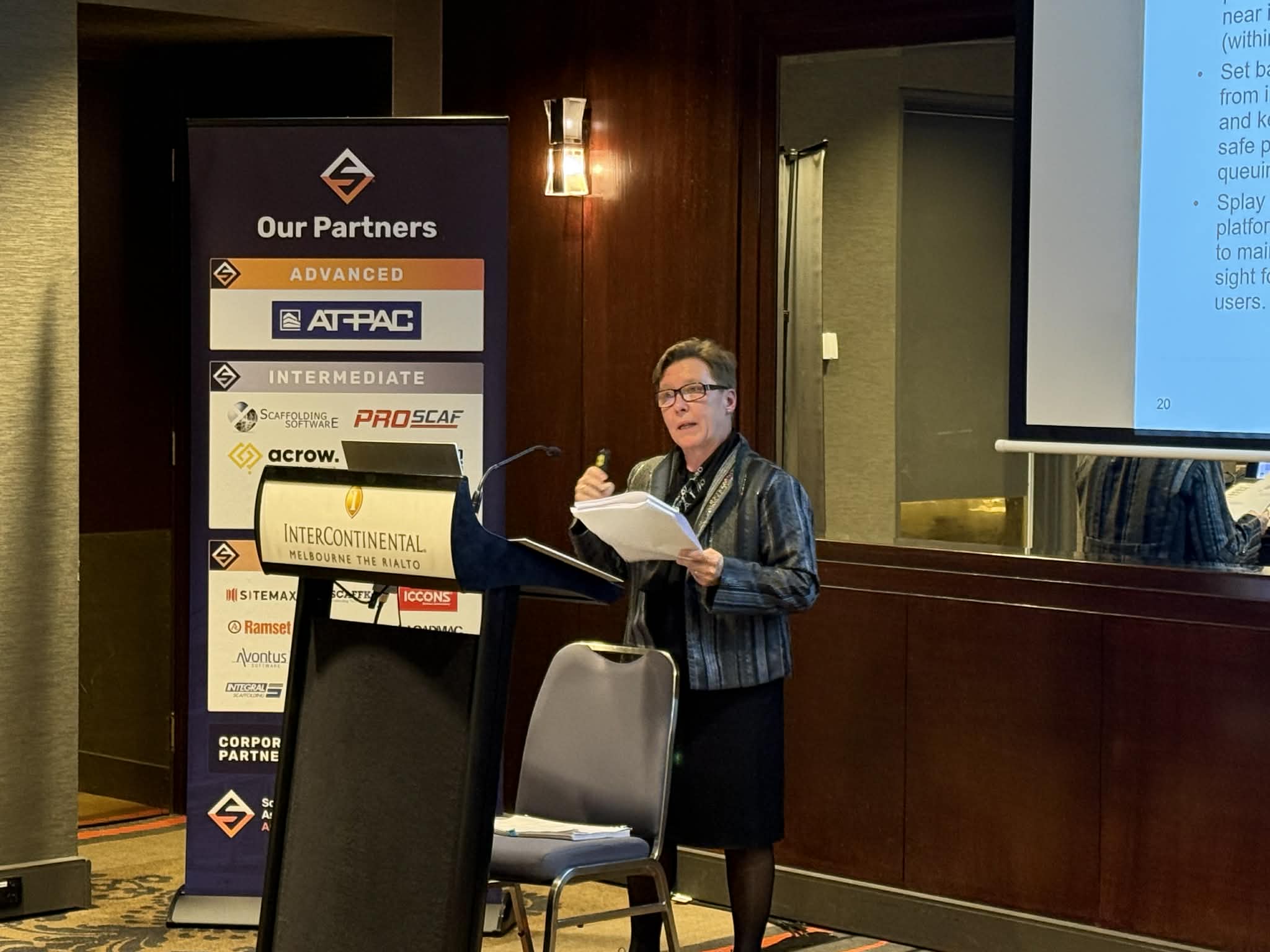
The Scaffolding Association Australia hosted its final Victorian Members Meeting for 2025 on 5th December, bringing together scaffolders, suppliers, councils, utilities and safety specialists for an afternoon focused on safer work practices and current regulatory expectations. The session covered public protection requirements, electrical safety, engineered containment systems, dropped-object prevention and WorkSafe Victoria’s latest guidance for the industry.
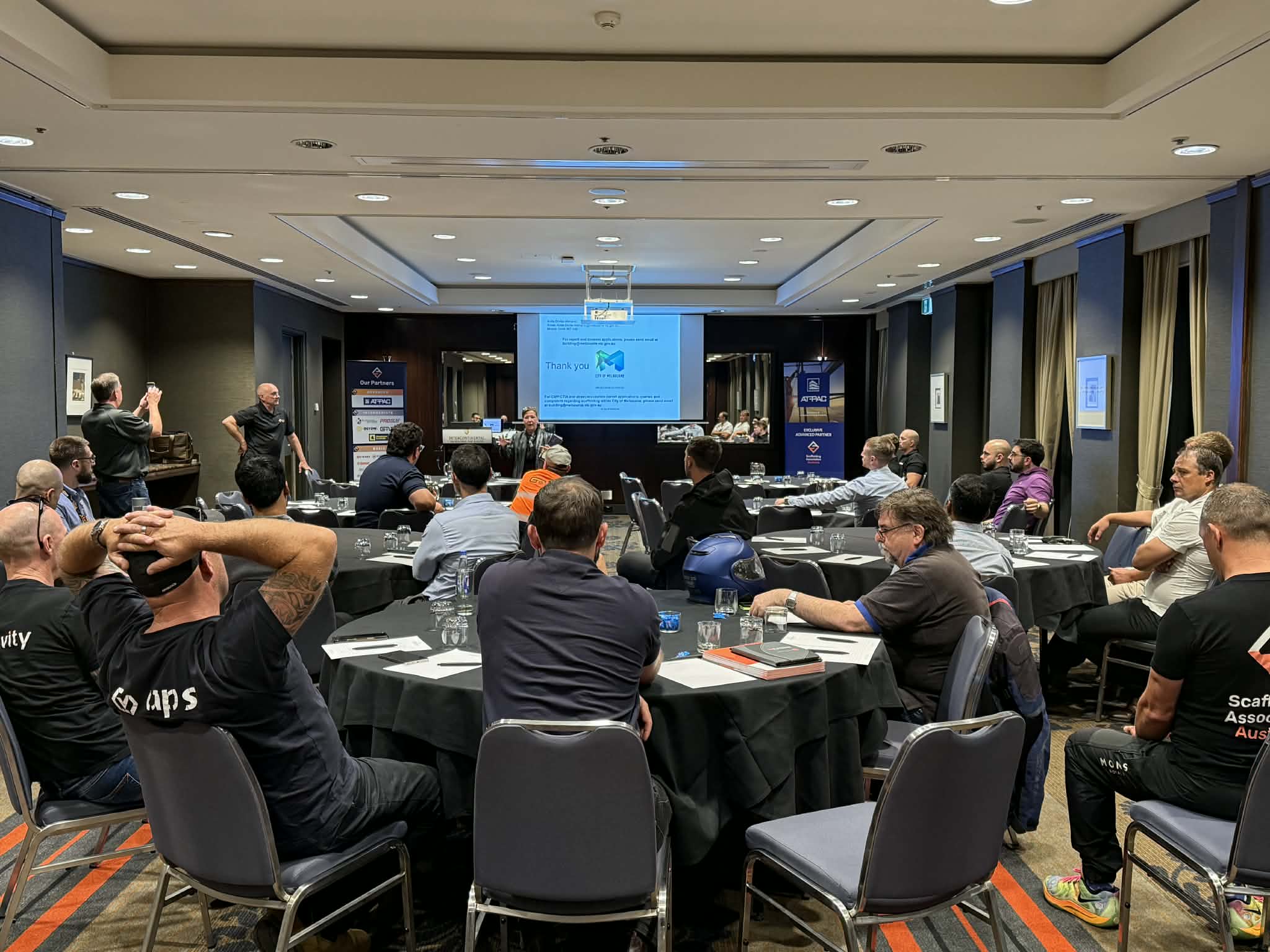
Scaffolding Requirements in Public Spaces – Melbourne City Council
Anita Dorfer-Mehanic from Melbourne City Council provided an important update on the Code of Practice for Building, Construction and Works requirements that apply when scaffolding affects footpaths, roads or public areas. The presentation outlined what contractors must consider when designing and installing scaffolds in busy urban environments, including:
- Pedestrian access and maintaining safe walkways
- Minimum setbacks from roads, driveways and public assets
- Engineering requirements for hoardings, gantries and scaffold structures
- Ensuring all components are secure, enclosed and free from sharp protrusions
- The process for Report & Consent and Construction Management Plans
This session emphasised the need for thoughtful planning whenever scaffolding interacts with public spaces, particularly in Melbourne’s CBD where space is limited and foot traffic is high.
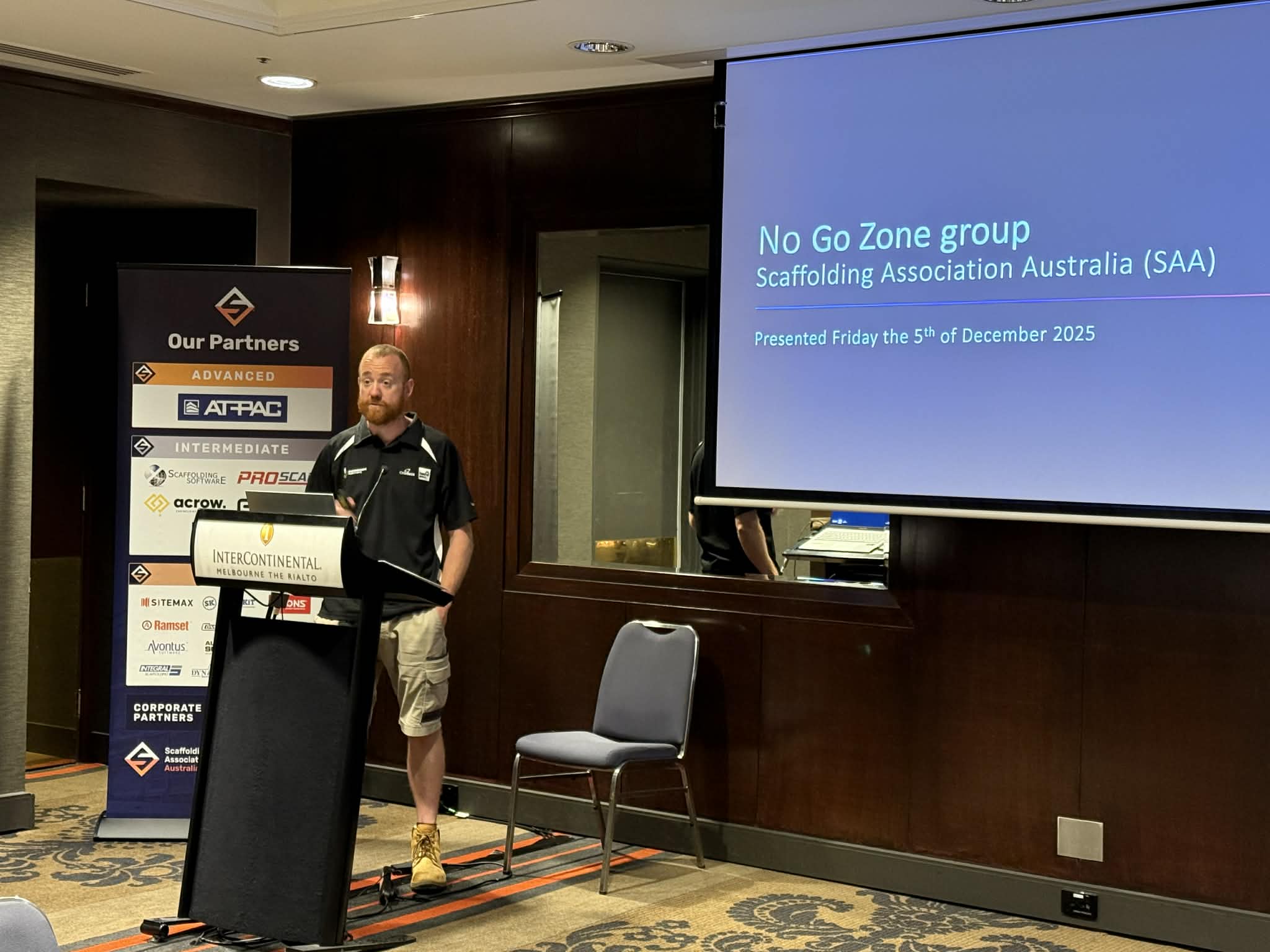
Working Safely Near Powerlines – CitiPower & Powercor
CitiPower & Powercor delivered a detailed walkthrough of the No Go Zone rules that apply when scaffolding is erected near overhead or underground electrical assets. Key messages included:
- A No Go Zone application must be lodged if scaffolding is within 4.6 metres of overhead powerlines.
- Temporary platforms of any kind are treated as scaffold under the regulations.
- Early engagement with the electrical distributor helps avoid breaches, rework and significant safety risks.
- The application process may involve site visits, isolation or shutdowns, warning devices, or additional safety measures depending on conditions.
- Many incidents occur when contractors assume clearances are safe based on sight alone—photos and visual judgement are often misleading.
This presentation reinforced the critical importance of verifying electrical risks before any installation begins.
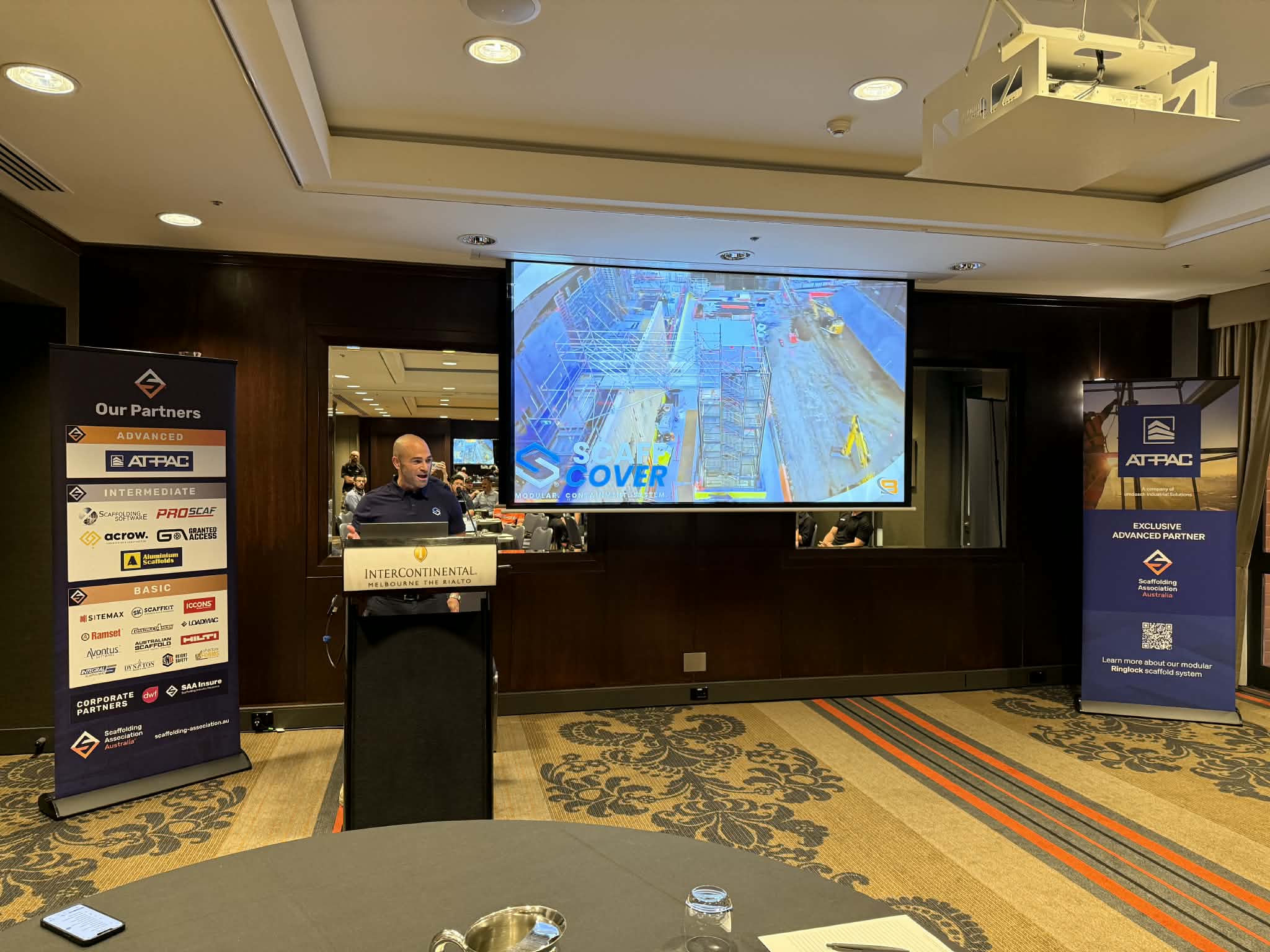
Safer, Reusable Containment – ScaffCover
ScaffCover introduced its engineered containment system designed to replace traditional plastic sheeting, shade cloth and mesh. Unlike disposable materials that often tear, flap in the wind and require constant reattachment, ScaffCover’s system:
- Uses secure, engineered fixings to stay intact during weather exposure
- Reduces manual handling at height
- Minimises waste through reusable panels
- Improves public presentation of work sites
- Offers a premium printed option (PrintGuard) for branding, renders and community messaging
Project examples showed how engineered containment can significantly improve both safety and site appearance, particularly around high-visibility commercial and inner-city works.
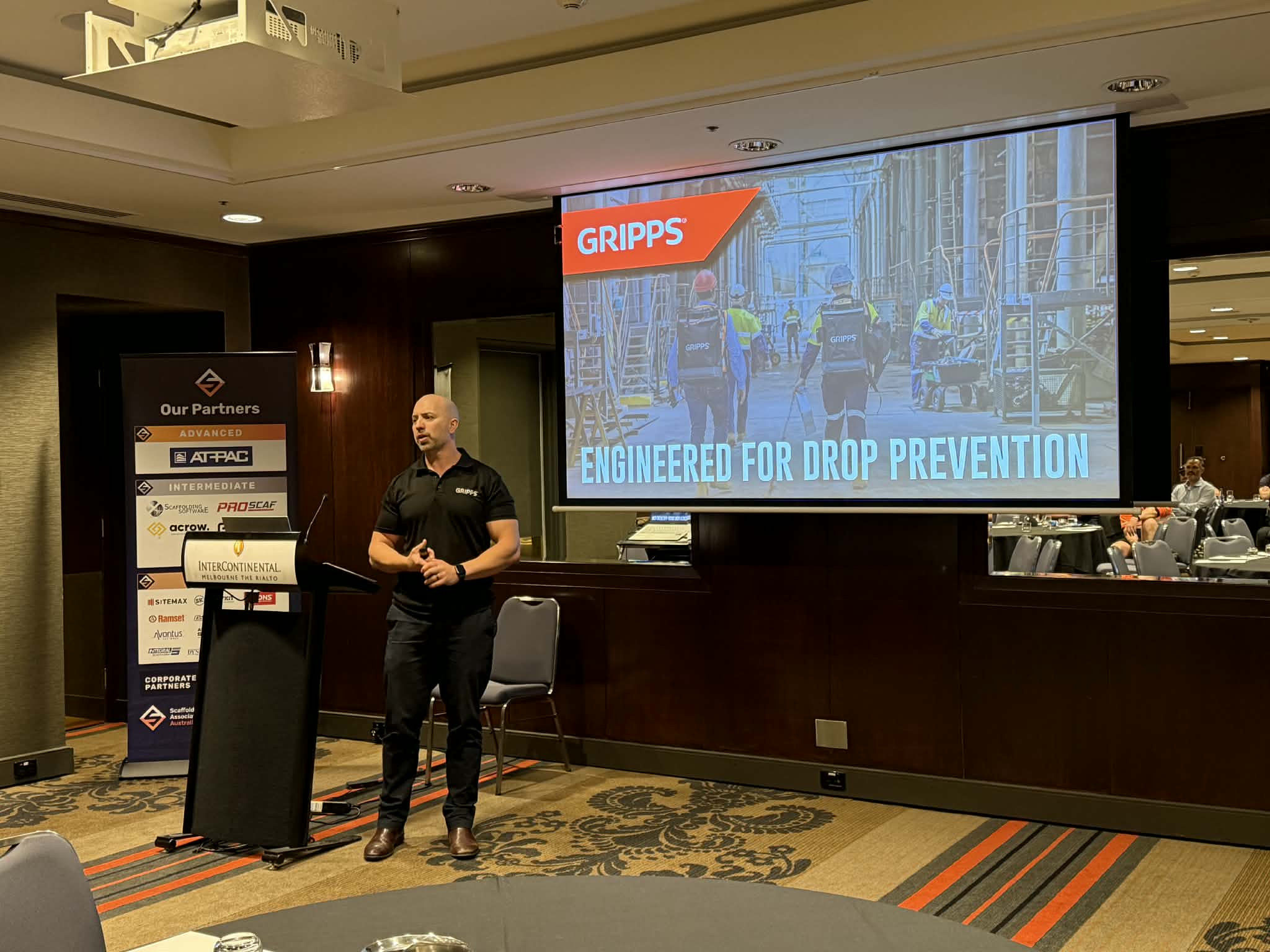
Dropped Object Prevention – GRIPPS
GRIPPS delivered a powerful session on the risks of dropped objects—consistently one of the top causes of serious injury and fatalities in construction. The presentation covered:
- How even small tools become dangerous when dropped from height
- Real-world case studies, including a Melbourne CBD incident
- The importance of tethering tools and securing work areas
- New product innovations designed to reduce dropped-object risks
Regulator Update – WorkSafe Victoria
WorkSafe Victoria outlined its Five Years, Five Hazards strategy and the regulator’s increased focus on risk areas affecting scaffolding and construction. Topics included:
- The introduction and enforcement of the 2-metre stair module requirement from 11 December 2025
- Fall prevention and the hierarchy of control
- New emphasis on trenching safety, manual handling injuries, noise exposure, respirable dust and moving plant
- Common compliance issues seen across Victorian construction sites
WorkSafe reinforced that scaffold safety is a continuing priority, particularly around erection methods, access, and risk identification.
A Strong Outcome for Industry
The meeting closed with networking, giving attendees the chance to speak directly with presenters, share challenges and discuss upcoming industry changes. The event highlighted the importance of continuous learning and collaboration across all parts of the scaffolding sector.
A full Members Meeting Report—containing detailed summaries and downloadable presentations—is available exclusively for SAA members.