
Victoria to Enforce 300 mm Maximum Step Height for Scaffold Access and Egress from 11th December 2025
WorkSafe Victoria has confirmed that a key change introduced in the 2024 Scaffolding Industry Standard will become enforceable across all Victorian construction sites from 11 December 2025.
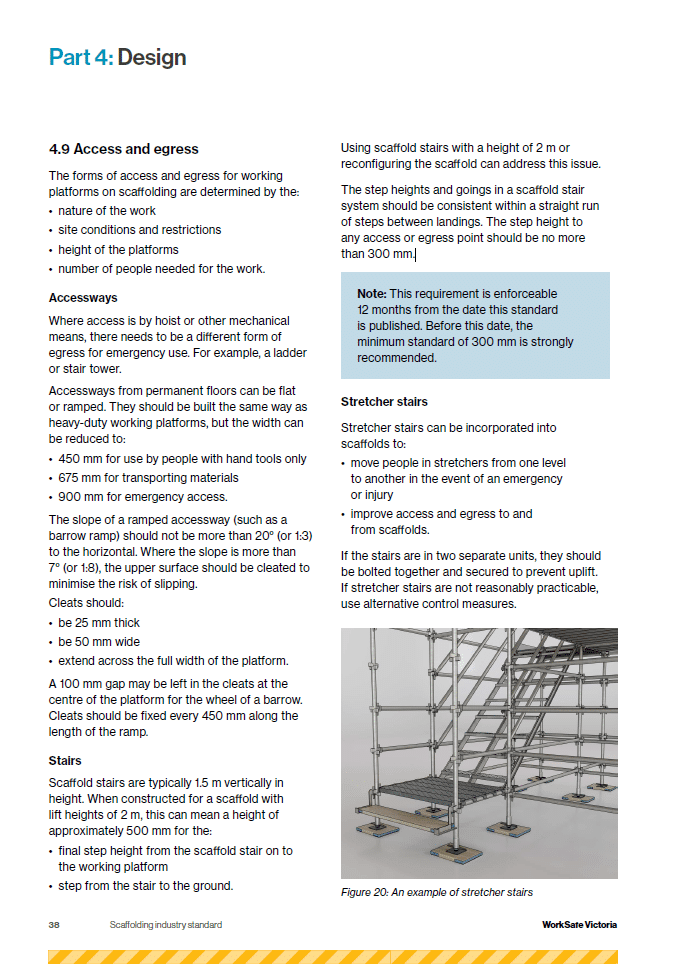
The requirement states:
“The step height to any access or egress point should be no more than 300 mm.”
— Scaffolding Industry Standard, page 38
This rule was first introduced in December 2024 with a 12-month transition period to allow scaffolding companies, scaffold suppliers, builders and principal contractors to prepare and adjust their systems.
From 11 December 2025, this will no longer be guidance. It becomes an enforceable minimum standard for all scaffold access and egress points in Victoria.
Background
The height of the last step onto or off a scaffold stair is a known contributing factor in slips, trips and fall-related injuries. In many setups, particularly where 2 m lift heights are used, the final step can be around 500 mm. WorkSafe highlights this problem directly on page 38 of the standard, noting that the issue can be addressed through:
- Using scaffold stairs designed for a 2 m height, or
- Reconfiguring the scaffold so that step heights remain consistent and safe
The new limit of no more than 300 mm brings Victoria into closer alignment with modern safety expectations regarding consistent step heights and safer access systems.
Who Must Comply
This rule applies to all scaffolding used on Victorian construction sites, including:
- Commercial, residential and industrial projects
- Fixed and temporary scaffold access points
- Stair towers, ladder access points and any egress locations
Builders, principal contractors and scaffold contractors all share responsibility for ensuring scaffolds can be accessed safely and compliantly.
What Scaffold Companies Should Do Now
With the enforcement date approaching, scaffolders should:
- Review all standard scaffold configurations – Ensure typical stair setups do not exceed the 300 mm final step height.
- Ensure any additional steps introduced to comply with step height do not reduce minimum landing sizes.
- Check systems where 2 m lifts are used – These setups most commonly produce oversized step heights.
- Consult engineers where required – Reconfiguration may mean adjusting lift heights, stair modules or platform locations.
- Communicate proactively with clients – Make sure site teams understand their role in maintaining compliant access and not altering scaffold configurations after handover.
Where to Find the Requirement
You can read the full detail on page 38 of the WorkSafe Victoria Scaffolding Industry Standard (December 2024).
This includes requirements for:
- Step heights
- Stair consistency
- Access/egress configurations
- Ramp, stair and stretcher stair specifications
Excerpt below.