
Stop Scaffold Tampering: A Three-Month National Awareness Campaign That Made an Impact
The Scaffolding Association Australia has wrapped up its three-month Stop Scaffold Tampering campaign – and the response from members, partners and the wider construction sector has been outstanding. What began as a simple idea to highlight a growing safety issue quickly became one of the Association’s most visible and widely supported initiatives of the year.
Across September, October and November, SAA delivered a coordinated national campaign designed to educate trades, lift awareness, and drive behaviour change around scaffold tampering on Australian construction sites. With thousands of workers accessing the campaign materials and members enthusiastically sharing resources across their networks, the message was heard loud and clear: Hands Off – Stop Scaffold Tampering.
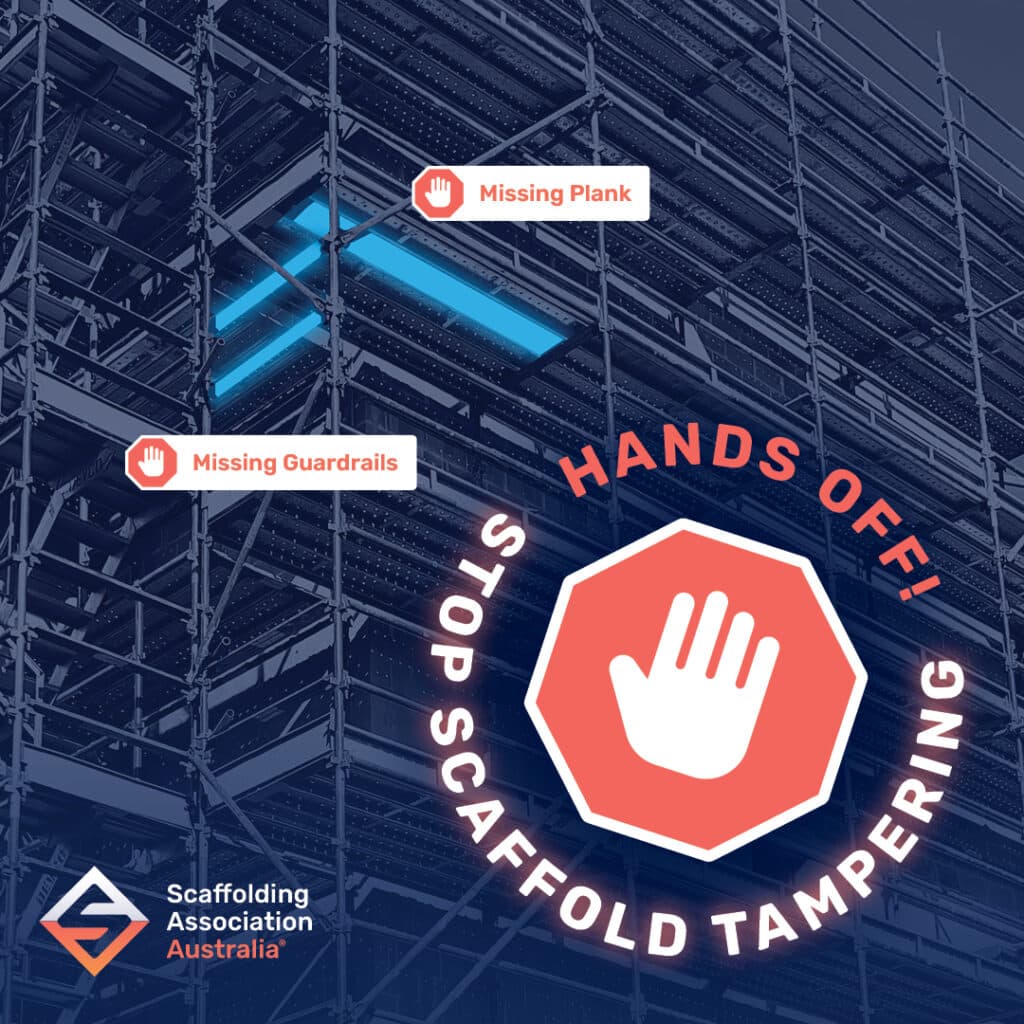
Why the Campaign Mattered
Scaffold tampering continues to be one of the most preventable causes of serious incidents on construction sites. Adjusting, removing or modifying scaffolding without the right licence, training or experience puts every worker at risk, and the legal consequences are severe.
The campaign set out with three goals:
Improve understanding of what scaffold tampering actually is
Highlight the real-world consequences – legal, financial and safety-related
Provide scaffold users and site teams with practical, ready-to-use tools to support toolbox talks, safety meetings and daily conversations
To make this easy for the industry, SAA supplied members with a package of campaign materials including flyers, site posters, social media tiles, an email signature, short videos and talking points for toolbox meetings. These were used widely in site offices, crib rooms, noticeboards and digital platforms across Australia.
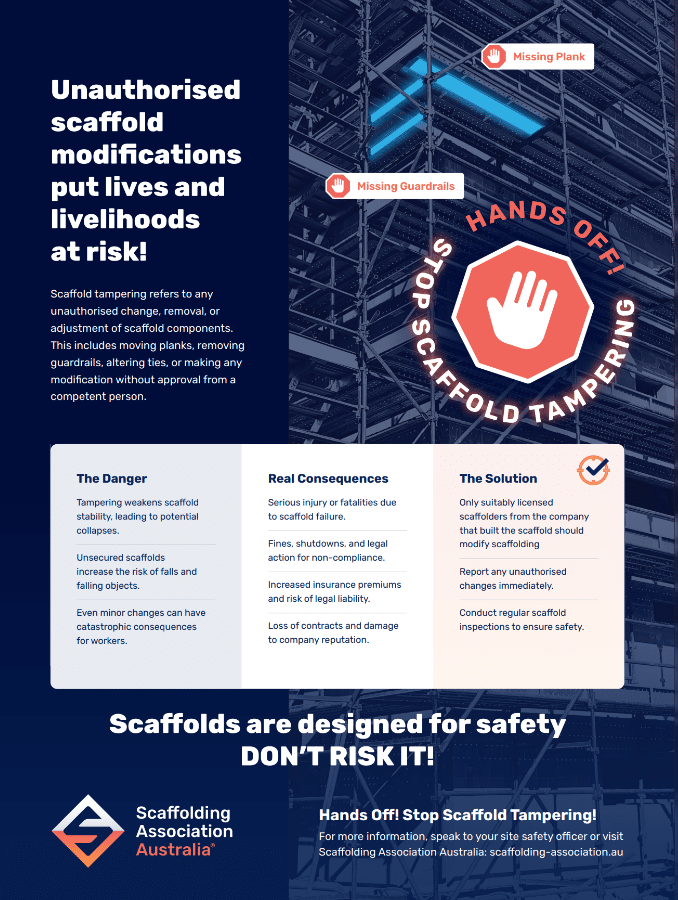
Month 1: What Is Scaffold Tampering? – Legal & Financial Consequences
The first month focused on defining scaffold tampering and explaining why only the company that erected the scaffold has the authority to adjust it. The email campaign highlighted:
The WHS penalties that apply
The risk of site shutdowns
The financial and legal exposure to workers and employers
The chain-reaction effect that one unauthorised change can trigger
Month 2: Scaffold Collapse
October shifted the focus to structural stability and how small modifications can cause catastrophic results. Supported by industry examples and inspection insights, the campaign reinforced:
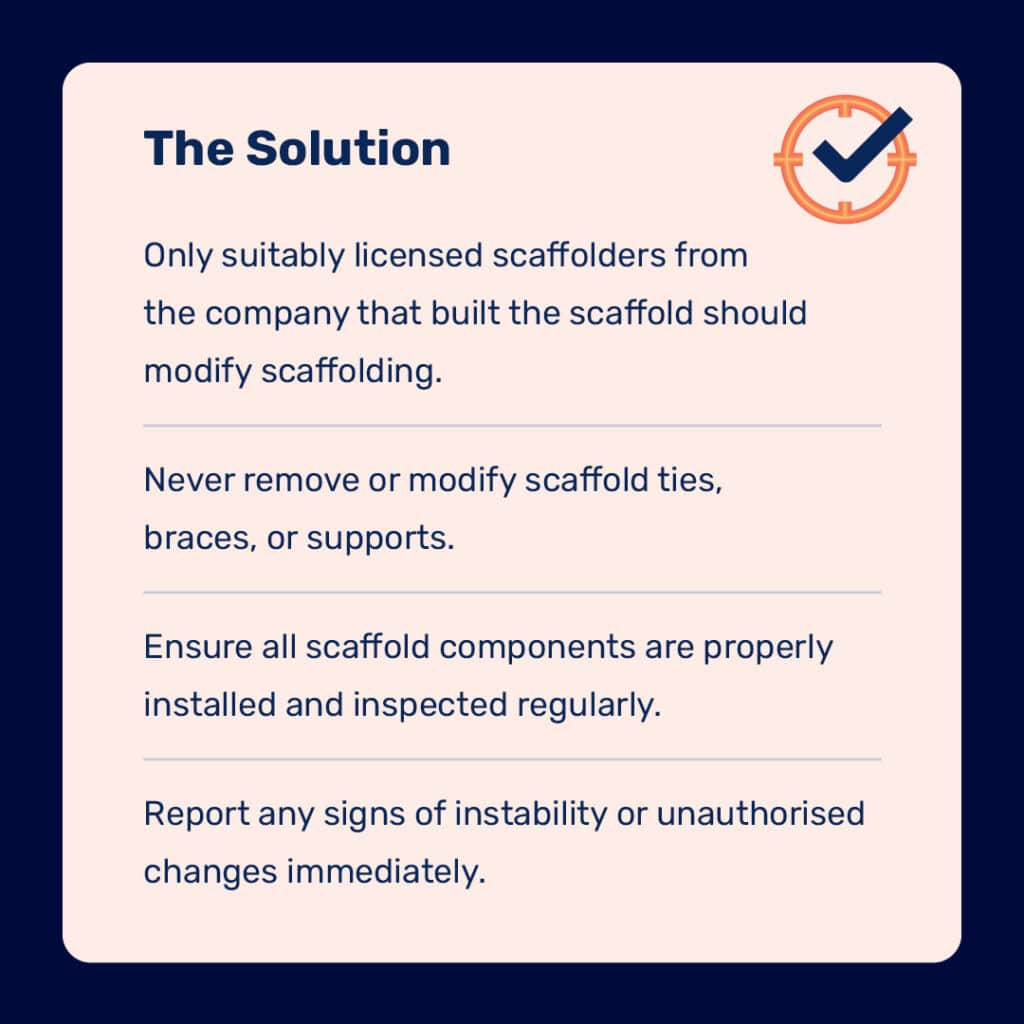
Why bracing, ties and components must never be removed
The risk of overloading an unsupported scaffold
The role of inspections and reporting
Month 3: Falls and Falling Objects
The final month tackled the two most common outcomes of scaffold tampering: falls from height and falling objects.
Key messages included:
Missing components and altered platforms dramatically increase fall risk
Unsecured planks, missing toeboards or altered access routes can send material to the ground
Tamper-free scaffolding is everyone’s responsibility, not just the scaffolders
These monthly campaigns sparked productive conversations on site, especially among non-scaffolding trades who hadn’t understood the seriousness of small “adjustments” before seeing the campaign material.
The campaign delivered exceptional reach and engagement across the Australian construction industry:
LinkedIn Campaign Metrics
(September–November 2025)
40,502 impressions
3,383 clicks
216 reactions
15 comments
52 reposts
12.08% engagement rate (well above industry average of 2–4%
And this doesn’t include:
Shares from SAA Members on their own pages
Shares from our General Manager’s personal LinkedIn
Activity from Facebook and Instagram
Content used internally across hundreds of construction sites
When member posts and personal shares are factored in, the true reach is significantly higher.
Strong Member Participation
A major reason for the campaign’s success was member involvement. Across the three months, members:
Displayed posters on construction sites
Shared campaign materials with clients and crews
Ran toolbox talks using the supplied hazard-specific flyers
Reposted SAA content to amplify the message
Forwarded the resources to project teams and safety groups
This level of buy-in shows just how important and relevant this issue is across the scaffolding and construction community.
What comes next
The campaign has been an important step in shifting attitudes and embedding better practices on site. But awareness is only the beginning.
SAA will continue building on this work with:
The Scaffold Safety Guide for Scaffold Users – currently in development and due for release in 2026
A new SWMS Template & Compliance Guide for members
Further digital training resources and video content
The momentum created by the Stop Scaffold Tampering campaign will carry forward into these next tools, giving workers more clarity, more guidance and stronger support in keeping scaffolds safe.
A United Industry Message
The success of this campaign shows that when the industry collaborates, meaningful change can happen. Over three months, thousands of workers across Australia saw, shared and discussed the same message:
Scaffold tampering is dangerous and completely preventable.
SAA thanks every member, builder, safety team and regulator who helped amplify the message and make this one of our most successful campaigns to date.
If you would like to continue accessing the campaign materials you find them here on the SAA Website.